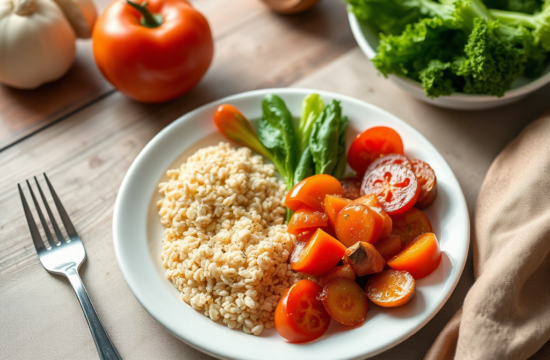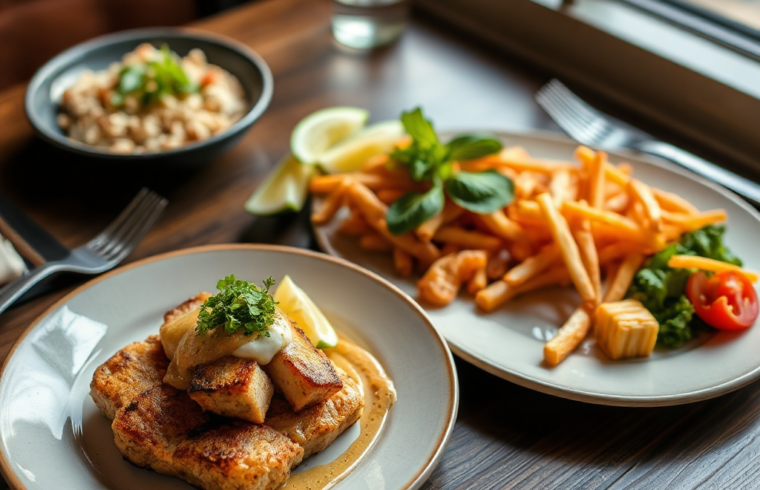
Estimate restaurant calories when numbers are missing by identifying each component of the dish, assigning a realistic portion size, and adding likely cooking fats, sauces, toppings, and drinks. Compare the meal with familiar foods, use menu descriptions to infer ingredients, and record a range rather than pretending the result is exact. Hidden oil, creamy dressings, fried coatings, large starch servings, and free bread commonly create the largest errors. When uncertainty is high, choose a simpler preparation, request sauces separately, prioritize a reasonable portion, and use the estimate consistently across similar meals.
Read the Dish as Separate Calorie Components
A restaurant entrée is easier to estimate when it is treated as a collection of ingredients rather than one mysterious number. Break the plate into its main carbohydrate, protein, vegetables, cooking fat, sauce, toppings, and beverage. A chicken bowl, for example, may contain rice, grilled chicken, avocado, cheese, salsa, a creamy dressing, and tortilla chips. Each item has a different calorie density and a different level of uncertainty.
Menu wording provides useful clues. “Steamed,” “poached,” or “grilled” usually suggests less added fat than “fried,” “crispy,” “breaded,” “buttered,” or “cream sauce,” although restaurant technique still varies. “Loaded,” “smothered,” and “shareable” often signal extra cheese, oil, starch, or a larger serving. A salad is not automatically light: nuts, cheese, croutons, oil-based dressing, and fried toppings may contribute more energy than the greens.
Begin with the most visible and substantial parts of the plate. Estimate the rice, pasta, potatoes, bread, or other starch first, then assess the protein and additions. This order prevents a common mistake: focusing on lean meat while overlooking a large mound of pasta or several tablespoons of dressing.
- Base: rice, noodles, potatoes, bread, beans, or grains.
- Main item: meat, seafood, eggs, tofu, or a meat substitute.
- Added energy: oil, butter, cheese, nuts, avocado, mayonnaise, and creamy sauces.
- Extras: chips, fries, desserts, sweet drinks, and complimentary bread.
Using the link How to estimate restaurant calories when numbers are missing as a repeatable reference is more useful than searching for an exact match that may use different portions. The aim is a defensible estimate, not laboratory precision.
Estimate Portions and Cooking Fats
Portion size and added fat usually create the widest gap between a home-style estimate and a restaurant estimate. A serving of grilled fish may be fairly predictable, while the oil used on the grill, butter brushed over the fish, or sauce poured underneath can be difficult to see. Two plates with the same ingredients may therefore differ substantially.
Use familiar visual comparisons. A palm-sized piece of cooked meat is often a more useful starting point than assuming the menu description means one standard serving. A cup-sized mound of cooked rice or pasta is different from a shallow side portion, and a deep restaurant bowl may hold several times as much. These comparisons are estimates, not fixed nutrition rules, so record a range when the serving looks unusually large.
Cooking method changes the calculation. Pan-frying, deep-frying, sautéing, and roasting with oil can add calories that do not appear in the ingredient name. Breaded foods also retain some oil in the coating. A plain baked potato and a potato covered in butter, sour cream, cheese, and bacon should be counted as separate components rather than as the same vegetable side.
When the amount of fat is unclear, ask a targeted question: “Is the fish cooked with butter or oil?” or “Can I have the dressing on the side?” A request for a modification is not a guarantee of a precise amount, but it reduces one major source of uncertainty. Choosing a grilled preparation instead of a fried one may make the estimate easier, though the grilled option can still include oil or a glaze.
A practical portion review asks three questions:
- Does the serving look like a usual household portion, or is it clearly oversized?
- Is the ingredient naturally dense, such as cheese, nuts, oil, avocado, or mayonnaise?
- Was the food fried, battered, buttered, glazed, or finished with a rich sauce?
Do not lower the estimate merely because the protein is labeled “healthy.” A grilled chicken salad with generous dressing and a side of bread may contain more calories than a modest sandwich with lean filling. The preparation and quantity matter alongside the ingredient’s reputation.
Use Menu Clues to Build a Calorie Range
A range is usually more honest than a single figure when restaurant numbers are absent. Build a lower estimate for a moderate serving with limited added fat and a higher estimate for a large serving with generous oil, sauce, or toppings. The range should be narrow enough to guide a decision but wide enough to acknowledge what cannot be observed.
Start by describing the meal in plain language. “Large chicken pasta with cream sauce and garlic bread” is easier to evaluate than “pasta entrée.” The description identifies several likely contributors: pasta as the starch, chicken as the main item, cream sauce as a dense addition, and bread as a separate side. A tomato-based sauce may be less calorie-dense than a cream sauce, but a large quantity of olive oil or cheese can change the comparison.
Restaurant menus also reveal preparation through adjectives and side choices. A burrito with rice, beans, cheese, sour cream, guacamole, and chips has more components to count than a taco plate with a simple filling and salsa. A “house dressing” may contain oil, mayonnaise, sugar, or dairy, while salsa or vinegar-based dressing may be easier to estimate. Sweetened tea, specialty coffee, cocktails, and large juices deserve their own line in the calculation.
For a quick estimate, use this sequence:
- Identify the base: decide whether the starch resembles a small side, a standard serving, or a large restaurant portion.
- Estimate the main item: note the size and whether it is lean, fatty, breaded, or fried.
- Add visible toppings: include cheese, nuts, avocado, bacon, croutons, and fried onions separately.
- Account for hidden additions: allow for oil, butter, glaze, mayonnaise, or creamy sauce.
- Count drinks and extras: include bread, chips, fries, dessert, and shared appetizers.
For example, a rice bowl may look balanced because it contains vegetables and protein, but a large rice base, oil-based marinade, cheese, and a creamy drizzle can move the estimate upward. A lower range might fit a modest bowl with salsa and little added fat; a higher range is more appropriate when the rice is heaped and the sauce is poured across the top.
Search tools and restaurant websites can help when a chain publishes nutrition information, but do not transfer a listed value blindly to an independent restaurant. Recipes, serving sizes, cooking oils, and toppings may differ. A database entry is a comparison point, not proof that the plate in front of you matches it.
Handle Uncertainty Without Losing Perspective
Uncertainty is unavoidable, but it does not make calorie tracking useless. The most practical approach is to be consistent: use the same visual standards, include the same categories of extras, and choose the upper end of a range when the meal is especially rich or oversized. Consistency makes patterns more visible over time even when individual restaurant estimates are imperfect.
People commonly make two opposite mistakes. The first is false precision, such as recording an unmeasured entrée as exactly 743 calories. The second is abandoning estimation entirely because oil and portion size cannot be known. A range, such as “moderate to high,” supports better decisions than either extreme. If the meal is a one-off occasion, a rough record may be sufficient; if restaurant meals are frequent, a repeatable method becomes more valuable.
Prioritize the uncertainties that can materially change the meal. The amount of leafy greens is rarely the main issue, while dressing, frying oil, cheese, creamy sauces, large starch portions, and sugary drinks often deserve attention. Spending several minutes estimating lettuce more precisely while ignoring a large cup of sweetened beverage reverses the practical priority.
Support Your Weight Loss Goals Huge Discount on the Best Certified Organic Nutrient Dense Supplement!
When ordering, reduce uncertainty before the food arrives. Ask for dressing or sauce separately, select one rich topping instead of several, choose a non-sweetened drink, and decide whether to eat the entire starch portion or save some. These choices are not required for every meal, and they may involve tradeoffs in satisfaction, cost, or convenience. They simply make the final estimate easier and give you more control when the menu provides no numbers.
Signs that your method is working include more consistent records, fewer surprises when comparing similar meals, and clearer recognition of which restaurant additions matter most. Signs it is failing include recording every meal as a very low estimate despite frequent fried foods, forgetting drinks and shared items, or changing your standards from one restaurant to the next. Adjust the process rather than searching for imaginary precision.
Apply the Method to Common Restaurant Meals
Different cuisines create different estimation challenges, so the same checklist should be adapted to the plate. In a burger meal, count the bun, patty, cheese, mayonnaise-based spread, bacon, and fries separately. A burger without cheese may still be substantial if the patty is large and the fries are plentiful. Replacing fries with a side salad may lower the estimate, but dressing and toppings still need attention.
For Mexican-style meals, separate the tortilla, rice, beans, meat, cheese, sour cream, guacamole, chips, and salsa. Guacamole and beans are not interchangeable: both may provide useful nutrients, but their portions and preparation differ. A burrito can also be difficult to judge because the filling is hidden. If it is very large, eating part and saving the rest creates a clearer portion boundary than trying to infer every ingredient after the meal.
Asian-style noodle and rice dishes often combine a dense base with oil-rich sauce. Stir-fried noodles may carry more added fat than steamed rice paired with a simpler protein, while tempura, fried rice, coconut-based sauces, and sugary glazes increase uncertainty. Sushi requires attention to specialty rolls, spicy mayonnaise, tempura fillings, cream cheese, and sauces rather than counting only the fish.
For salads, inspect the ingredients that sit above the greens. Grilled chicken, vegetables, beans, and a measured dressing are easier to estimate than fried chicken, cheese, nuts, crispy toppings, and a creamy dressing applied liberally. For pizza, consider crust thickness, slice size, cheese quantity, meat toppings, and the number of slices. “Two slices” is not a fixed amount when one pizza has a thin crust and another has a thick, heavily topped base.
A useful decision rule is to simplify the meal when precision matters: select a recognizable protein, a plainly prepared side, vegetables, and a sauce served separately. Choose a broader range when the dish is fried, mixed, creamy, oversized, or difficult to see through. The link How to estimate restaurant calories when numbers are missing is most useful when applied before ordering, while menu descriptions and visual checks are still available.
Restaurant eating does not require perfect arithmetic. It requires noticing the ingredients that carry the greatest uncertainty, separating visible components, and recording a realistic amount rather than a flattering guess.
For additional context, readers can compare restaurant estimates with nutrition information from the USDA food and nutrition resources and use published serving information as a reference point rather than an exact match for an unlisted restaurant dish.
Frequently Asked Questions
What should I count first when a restaurant meal has no calorie information?
Count the largest components first: the starch, main protein, cooking fat, sauce, toppings, drink, and extras. These usually affect the estimate more than low-calorie vegetables.
Should I record one calorie number or a range?
A range is more realistic when portion size, oil, or sauce is unclear. Use a consistent middle or upper estimate based on the meal’s richness and size.
Why do restaurant salads sometimes have more calories than expected?
Dressings, cheese, nuts, croutons, fried toppings, avocado, and large portions of protein can outweigh the low-calorie greens.
How can I make an estimate more reliable before ordering?
Read the preparation words, ask for sauces separately, choose a plainly prepared dish, and decide how much of the starch or bread you plan to eat.
Is a restaurant database entry accurate for every location?
No. Published values may use a specific recipe and serving size, while another location may use different ingredients, oil, toppings, or portions.
Conclusion
Estimating an unlisted restaurant meal works best as a component-by-component exercise. Identify the starch and main item, inspect preparation words, add cooking fats and rich toppings, then include drinks, bread, chips, fries, or dessert. Give the result a realistic range when the portion or recipe cannot be verified. Prioritize hidden oil, creamy sauces, fried coatings, oversized starches, and sweet beverages rather than spending time calculating low-calorie vegetables precisely. When you can influence the order, sauces on the side and simpler preparations reduce uncertainty without requiring a completely restrictive meal. Record the estimate using the same standards each time, compare similar dishes, and refine your judgment from repeated restaurant situations rather than expecting a perfect number from a plate that was never measured.
Support Your Weight Loss Goals
HUGE DISCOUNT ON THE BEST CERTIFIED ORGANIC NUTRIENT DENSE SUPPLEMENT!
Related Content
- Carnivore Diet Tips for Beginners: Unlock Simple Strategies to Jumpstart Your Meat-First Wellness Journey
- Is Low Carb Dieting Better Than Balanced Eating Plans: Key Differences and Health Outcomes
- Make Weight Loss Easier With These Tips
- The Ultimate Guide to Healthy Dieting: Tips and Tricks for Success
- The Ultimate Guide to Healthy Dieting: Tips and Tricks for Success