Thigh fat loss comes primarily from reducing overall body fat through a sustainable calorie deficit, while exercise can strengthen and reshape the muscles beneath the fat but cannot selectively burn fat from the thighs. Resistance exercises such as squats, split squats, and hip hinges preserve or build leg muscle, while walking, cycling, or other cardio increases energy expenditure. Genetics, hormones, and sex-related fat distribution influence whether the thighs shrink early or late during weight reduction. Track waist and thigh measurements, strength, and clothing fit over several weeks rather than judging progress from daily scale changes or high-repetition leg workouts.
Why Thigh Fat Cannot Be Reduced in Isolation
Body-fat distribution determines where stored energy is most visible and where it tends to remain during weight reduction. Some people carry more fat around the hips and thighs, while others store a greater proportion around the abdomen. Genetics, age, sex-related hormones, and total body-fat level all contribute to that pattern. Exercise selection does not override it: working a muscle increases the demands placed on that muscle, but it does not instruct the body to draw most of its fuel from the fat directly above it.
During a sustained energy deficit, fat cells release stored energy for use throughout the body. The location of that release is controlled by physiology rather than by which nearby muscle is contracting. Hundreds of inner-thigh lifts may create fatigue and improve muscular endurance, yet they do not guarantee a measurable reduction in inner-thigh fat. A person may instead notice changes first in the face, waist, or upper body, even if leg exercises dominate the training program.
Exercise can still alter how the thighs look. Building the quadriceps, hamstrings, gluteal muscles, and hip adductors can produce a firmer outline and improve the proportions of the lower body. This is a change in muscle size and shape, not proof that fat was burned locally. Early changes may also reflect temporary shifts in muscle glycogen, water, or inflammation after training. Soreness and a tighter feeling immediately after a workout should not be mistaken for permanent fat reduction.
The useful distinction is between local muscle adaptation and whole-body fat reduction. Strength training manages the first; an ongoing energy deficit governs the second. Combining them is more effective for body composition than choosing only one. Dieting without resistance work may reduce both fat and lean tissue, while leg exercises without an energy deficit can improve strength without substantially reducing the fat layer covering the muscles.
Expectation management matters when following thigh fat loss guidance. If the thighs are a genetically favored storage area, visible change may occur later than expected. That does not automatically mean the program has failed. Falling waist measurements, improved fitness, and a gradual downward weight trend can indicate progress before the thighs change noticeably. Chasing rapid local results often leads to excessive restriction, daily punishing workouts, or abandonment of a sound approach.
Exercises That Change Thigh Shape and Energy Use
A productive exercise program gives the thighs enough resistance to maintain or gain muscle while using broader activity to raise total energy expenditure. Compound movements are usually more efficient than long sequences of isolation exercises because they train several lower-body muscles at once. Squats and step-ups emphasize the quadriceps and gluteal muscles; Romanian deadlifts and hip hinges load the hamstrings and glutes; split squats challenge each leg independently and can expose side-to-side differences.
Exercise choice should match mobility, experience, and joint tolerance. A beginner might use chair squats, low step-ups, and supported split squats before progressing to external weights. Someone whose knees become painful during deep squats could shorten the range, use a stable support, or choose hip hinges and controlled cycling while seeking qualified assessment for persistent pain. Discomfort that feels sharp, causes swelling, changes walking, or continues outside training is not a normal price of fat loss.
Two or three lower-body resistance sessions per week can provide a practical starting structure, with recovery between demanding sessions. The resistance should make the final repetitions challenging while allowing controlled technique. Progress can come from adding a small amount of weight, performing another repetition, increasing the range of motion, or using a harder variation. Adding dozens of easy repetitions indefinitely tends to improve endurance more than strength and may aggravate joints without creating a meaningful additional calorie deficit.
Cardio serves a different purpose. Brisk walking is accessible, easy to recover from, and often easier to repeat consistently than intense intervals. Cycling, swimming, incline walking, and elliptical training can increase energy use with different levels of impact. High-intensity intervals are optional rather than mandatory; they save time but create more fatigue and may interfere with leg recovery when paired with demanding strength sessions.
A balanced week could include two full-body strength sessions featuring a squat pattern and a hip-hinge pattern, several brisk walks, and one longer low-to-moderate-intensity activity. Daily movement outside formal workouts also counts. Walking during calls, taking stairs when comfortable, or completing errands on foot may be more sustainable than adding another exhausting class.
The common failure mode is treating leg burning as evidence of local fat burning. Sensation reflects muscular effort and metabolite accumulation, not the source of the fat being used. A better exercise approach for thigh fat loss tracks strength progression, weekly activity, recovery, and overall body measurements. Training is working when movements become stronger or more controlled and activity remains repeatable without persistent pain or exhaustion.
How Dieting Reduces Overall Fat Without Sacrificing Muscle
Dieting affects thigh fat by creating an energy deficit across time, not by targeting a particular body region or removing a single food. The deficit needs to be large enough to produce a gradual trend but moderate enough to preserve training quality, daily function, and adherence. Severe restriction may produce a fast initial scale drop from water and stored carbohydrate, followed by hunger, poor workouts, and difficulty maintaining the plan.
Protein-rich foods help make a reduced-calorie diet more filling and provide amino acids used to maintain muscle tissue. Practical choices include eggs, fish, poultry, Greek yogurt, cottage cheese, tofu, tempeh, beans, and lentils. Protein needs vary with body size, health status, and activity, so people with kidney disease or another condition affecting nutrition should obtain individualized guidance rather than adopting a high-protein target from social media.
High-fiber, water-rich foods can provide satisfying meal volume for fewer calories than many heavily processed alternatives. Vegetables, whole fruit, legumes, oats, potatoes, and intact whole grains can fit this role. Dietary fat remains useful for flavor and nutrition, but oils, nut butters, nuts, and cheese are energy-dense and easy to underestimate. Carbohydrates do not need to be eliminated; rice, bread, fruit, or potatoes can support training when portions fit the person’s overall intake.
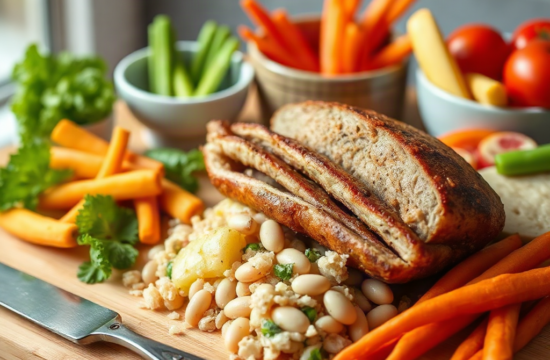
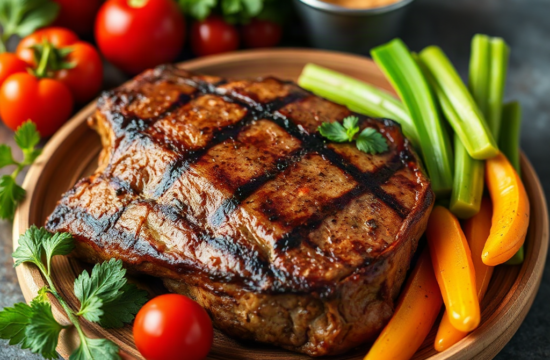
A workable plate might contain grilled tofu or chicken, roasted vegetables, a measured serving of rice, and a yogurt-based sauce. Compare that with a meal built around a large restaurant entrée, sweetened drink, and freely poured dressing: both may contain protein, but the second makes an energy deficit harder to judge. Liquid calories, frequent alcohol, grazing while cooking, and oversized condiments are often more useful places to investigate than removing fruit or avoiding food after an arbitrary hour.
A Compact Diet Check
- Build each main meal around protein: choose a recognizable serving rather than leaving protein to chance.
- Add produce or another fiber-rich food: use volume to manage hunger instead of relying only on smaller portions.
- Measure calorie-dense extras temporarily: oils, spreads, dressings, and snack foods can obscure the intended deficit.
- Keep a few repeatable meals: predictable breakfasts or lunches make intake easier to evaluate without requiring a rigid menu.
Food tracking is an option, not a requirement. Some people benefit from recording portions for a short period; others do better with structured plates and regular meal times. A method is failing when it causes persistent preoccupation with food, recurrent binge eating, dizziness, major training decline, or social withdrawal. Anyone with a current or past eating disorder should approach intentional weight loss with appropriate clinical support. No food pattern can promise that the thighs will shrink first, and supplements marketed for lower-body fat do not replace an energy deficit.
How to Measure Progress and Adjust Your Approach
Progress is clearer when several indicators are reviewed over weeks rather than reacting to a single weigh-in or photograph. Body weight can fluctuate with sodium intake, menstrual-cycle changes, bowel contents, carbohydrate intake, and muscle soreness. Lower-body strength training can temporarily increase water retention in the trained muscles, making the scale look unchanged even while the longer trend is moving in the intended direction.
Support Your Weight Loss Goals Huge Discount on the Best Certified Organic Nutrient Dense Supplement!
Use consistent conditions for measurements. Weighing at a similar time and examining a weekly average reduces noise. Measure the thigh at the same marked distance above the kneecap, with the leg relaxed and the tape level. Clothing fit and standardized photos can add context, although differences in posture, lighting, and camera position can create misleading comparisons. Monthly thigh measurements are generally more informative than daily checks because regional changes are small and tape placement is imperfect.
Suppose a person completes resistance training twice weekly, walks most days, and follows a consistent meal structure. After four weeks, average weight and waist size have decreased modestly, squat repetitions have improved, but the thigh measurement is nearly identical. The sensible response is usually to continue rather than slash food intake. The unchanged thigh measurement may reflect measurement error, muscle adaptation, or a body-fat pattern that releases lower-body fat later.
A different response is warranted if average weight, waist, thigh measurement, and clothing fit remain unchanged for several weeks and intake has been genuinely consistent. First check portions, weekend meals, beverages, and recent reductions in everyday movement. Then make one modest change, such as reducing a calorie-dense extra or adding a repeatable walking period. Changing food intake, cardio, meal timing, and strength volume simultaneously makes it difficult to identify what helped and raises the chance of excessive fatigue.
Signs of a workable approach include manageable hunger, stable or improving strength, acceptable sleep, and gradual measurement changes. Warning signs include persistent exhaustion, irritability, declining performance, recurrent overeating, disrupted menstrual cycles, or pain that worsens with activity. These signals call for reassessment rather than greater restriction. A clinician or registered dietitian can help when medications, pregnancy, metabolic conditions, significant weight changes, or disordered eating complicate the process.
Plateaus are also normal because a smaller body may use less energy and people often move less unconsciously while dieting. The solution is not automatically more thigh exercise. Review the complete pattern described in thigh fat loss expectations: energy intake, resistance progression, cardio, daily movement, sleep, and recovery. The best adjustment is the smallest one that restores a measurable trend without making the routine difficult to sustain.
Frequently Asked Questions
Can squats remove fat from my thighs?
Squats strengthen the quadriceps, glutes, and other lower-body muscles, but they do not selectively remove the fat covering them. Thigh fat may decrease as part of overall fat reduction.
Why are my thighs not getting smaller while I lose weight?
Your body may preferentially release fat from other areas first. Temporary training-related water retention, inconsistent tape placement, and lower-body muscle gain can also mask small changes.
Is walking or strength training better for thigh fat loss?
They serve complementary purposes. Walking adds repeatable energy expenditure, while strength training preserves or develops muscle and changes lower-body shape. Combining both is usually more practical than choosing one.
Do inner-thigh exercises make the inner thighs smaller?
They can strengthen the adductor muscles but cannot direct fat loss to the inner thighs. Visible reduction depends more on whole-body fat change and individual fat distribution.
When should I change my diet or workout?
Review the program when several weeks of consistent measurements show no trend, or sooner if pain, extreme hunger, poor sleep, recurrent overeating, or declining performance develops. Change one manageable variable at a time.
Conclusion
Thigh appearance responds to two related but separate processes: overall fat reduction and local muscle development. Prioritize a moderate, maintainable energy deficit, protein- and fiber-rich meals, progressive resistance exercise, and cardio or daily movement you can repeat. Judge the approach with weekly weight trends, consistently placed measurements, clothing fit, strength, hunger, and recovery rather than soreness or daily visual checks.
If progress stalls, audit portions, drinks, weekend intake, and everyday movement before adding extreme restrictions or high-volume leg workouts. Make one modest adjustment and allow enough time to evaluate it. Genetics may make the thighs one of the later areas to change, but a slower regional response does not erase improvements elsewhere. Persistent pain, disruptive eating behavior, unusual fatigue, or health conditions affecting weight warrants individualized professional advice.
Support Your Weight Loss Goals
HUGE DISCOUNT ON THE BEST CERTIFIED ORGANIC NUTRIENT DENSE SUPPLEMENT!
Related Content
- Breaking the Dieting Cycle: Eat for Life, Not Just for Loss
- Weight Loss Is Possible With These Tips
- Fight “The Battle Of The Bulge” And Win!
- How to Manage Intense Hunger Without Abandoning Your Diet: Causes, Timing, And Foods That Work
- Savor the Journey: How to Lose Weight Without Cutting All Carbs and Still Enjoy Your Favorite Foods