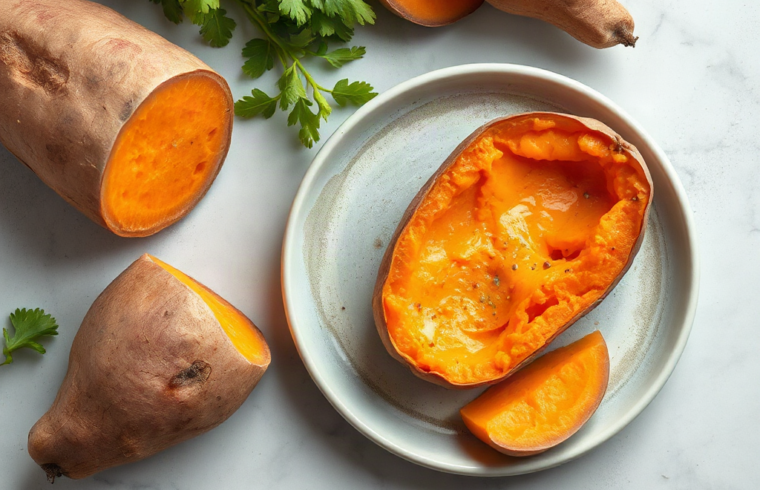
Sweet potato recipes for natural weight loss work best when the potato is treated as a fiber-rich carbohydrate rather than topped with calorie-dense extras or served in oversized portions. Pair a moderate serving with protein, non-starchy vegetables, and modest amounts of fat to create satisfying meals that may make a calorie deficit easier to maintain. Baking, steaming, microwaving, and air-frying with limited oil preserve the ingredient’s practical value, while sugary casseroles and deep-fried versions can undermine it. Five useful options are stuffed sweet potatoes, lentil bowls, egg hash, blended soup, and seasoned wedges served with a lean protein.
How Do Sweet Potatoes Fit a Weight-Loss Meal?
Sweet potatoes are best viewed as the carbohydrate portion of a meal, not as a weight-loss remedy by themselves. They provide fiber, potassium, beta-carotene, and carbohydrate for energy, but body-weight change still reflects the broader eating pattern and energy balance over time. Their main practical advantage is that a plainly cooked sweet potato has substantial volume and a naturally sweet flavor, which can make a controlled portion feel more satisfying than a small serving of a highly processed snack.
Meal composition determines whether that satisfaction lasts. A sweet potato eaten alone supplies relatively little protein, so hunger may return sooner than it would after a mixed meal. Pairing it with eggs, beans, lentils, chicken, fish, tofu, cottage cheese, or plain Greek yogurt creates a more complete plate. Non-starchy vegetables add further volume without requiring large amounts of oil. A useful visual starting point is roughly half a plate of vegetables, one quarter protein, and one quarter sweet potato or another starchy food.
Preparation can change the nutritional tradeoff more than the variety or color of the potato. A baked sweet potato topped with black beans, salsa, cabbage, and a spoonful of yogurt is a different meal from the same potato covered with butter, syrup, marshmallows, and candied nuts. The first combines fiber and protein with measured fat; the second concentrates added sugar and fat while making portions harder to judge. Neither a white nor an orange sweet potato automatically produces weight loss, and no preparation cancels the need to consider the rest of the day’s intake.
Natural sweetness can still be useful. Cinnamon, smoked paprika, cumin, chili powder, garlic, lime, and fresh herbs build flavor with little or no added sugar. Leaving edible skin on after thorough washing retains texture and some fiber, although peeling is reasonable for soups or for people who dislike the skin. The practical goal is not to make every recipe extremely low in calories. It is to produce a meal enjoyable enough to repeat while keeping energy-dense additions deliberate.
A good recipe is working when it holds hunger until the next planned meal, fits comfortably into the day, and does not trigger persistent cravings for extra toppings or snacks. If hunger returns quickly, increase protein or non-starchy vegetables before adding another large serving of potato. If progress stalls despite consistent habits, examine cooking oil, sauces, cheese, nuts, and serving size rather than assuming the sweet potato itself is the problem.
Five Balanced Sweet Potato Meals
These five meal formats use ordinary ingredients and can be adjusted for different budgets, schedules, and dietary preferences. Amounts should match personal energy needs, medical considerations, and hunger cues; the objective is a balanced plate rather than a universal serving prescription.
1. Black Bean Stuffed Sweet Potato
Bake or microwave a medium sweet potato until tender, split it, and add black beans, tomato salsa, shredded cabbage, and plain Greek yogurt. The beans and yogurt supply protein, while cabbage increases volume and crunch. Choose salsa without a large amount of added sugar, and measure avocado or cheese if using either. A common mistake is adding beans, cheese, avocado, sour cream, and oil together without adjusting their portions; individually nutritious toppings can still create an unexpectedly energy-dense meal.
2. Chicken and Sweet Potato Sheet-Pan Meal
Roast sweet potato cubes with broccoli, red onion, and skinless chicken breast or thigh. Coat the ingredients lightly rather than pouring oil directly over the pan, then season with paprika, garlic, pepper, and lemon. Chicken breast is leaner, while thigh meat may remain juicier and easier to reheat. Either can fit, but skin, oil, and creamy finishing sauces deserve attention. Cut the potato into consistent pieces so it finishes alongside the vegetables instead of requiring extra roasting time and oil.
3. Lentil and Sweet Potato Curry Bowl
Simmer diced sweet potato with lentils, tomatoes, onion, ginger, and curry spices. Use broth or water as the main cooking liquid, adding a measured amount of coconut milk only if its richness is important to the dish. Lentils bring fiber and plant protein, making the bowl more filling than sweet potato curry served mainly over rice. If rice is included, use a smaller serving because the potato already fills the starchy-carbohydrate role.
4. Sweet Potato and Egg Breakfast Hash
Sauté pre-cooked sweet potato cubes with mushrooms, spinach, peppers, and onion in a lightly oiled pan, then add eggs or a mixture of eggs and egg whites. Pre-cooking prevents the vegetables from becoming greasy while waiting for raw potato to soften. Sausage and bacon add flavor but are not required; smoked paprika, scallions, and hot sauce can provide contrast with less saturated fat. People who need more morning protein can add another egg, egg whites, or a side of plain yogurt rather than doubling the potato.
5. Blended Sweet Potato Soup With Protein
Blend cooked sweet potato with carrots, onion, garlic, and low-sodium broth, then season with cumin or ginger. Serve the soup with shredded chicken, white beans, or tofu mixed in rather than treating a smooth vegetable purée as a complete meal. Cream and coconut milk create a richer texture, but blended white beans or a small spoonful of yogurt can add body with protein. Soup portions can look generous while lacking staying power, so include a visible protein source and a crunchy vegetable side.
Which Cooking Methods and Toppings Work Best?
Baking, steaming, boiling, microwaving, and air-frying can all produce weight-conscious sweet potato dishes; the quantity of added fat matters more than choosing one supposedly perfect method. Microwaving is the fastest option for a whole potato and requires no oil. Baking develops a sweeter, drier texture, while steaming and boiling are useful for mash, curry, and soup. Air-frying produces crisp edges, but it should not be confused with deep-frying if the pieces are heavily coated in oil.
Oil is easy to underestimate because it spreads over food and disappears visually during cooking. Measure it before tossing cubes or wedges, especially when preparing several servings at once. Parchment paper, a well-heated pan, and space between pieces improve browning without repeated pours of oil. For wedges, cut evenly, dry the surfaces, season well, and turn them once. They will not duplicate restaurant fries exactly, but they can provide crispness while keeping the recipe easier to portion.
Toppings should solve a meal need rather than accumulate automatically. Beans, yogurt, cottage cheese, eggs, fish, and poultry can address protein. Salsa, herbs, citrus, pickled onions, cabbage, and steamed greens add moisture, acidity, or texture. Tahini, nuts, seeds, avocado, cheese, butter, and pesto contribute useful flavor and nutrients, but they are energy dense; selecting one in a modest amount is usually more manageable than layering several.
| Meal goal | Useful choice | Watch for |
|---|---|---|
| Fast lunch | Microwaved potato, beans, salsa, yogurt | Oversized cheese and avocado portions |
| Crisp side | Air-fried wedges with measured oil | Free-poured oil and creamy dips |
| Batch dinner | Roasted cubes, vegetables, lean protein | Too little protein for the potato portion |
| Comforting soup | Broth-based purée with beans or chicken | Heavy cream without a protein source |
Added sugar is rarely needed because heat concentrates the potato’s own sweetness. For a breakfast-style bowl, cinnamon and plain yogurt offer contrast without turning the dish into dessert. If maple syrup or honey is part of the desired flavor, measure a small quantity rather than pouring it freely. A recipe is drifting away from its purpose when the toppings contribute more energy than the potato and still fail to provide meaningful protein or vegetable volume.
How Should You Portion and Prepare Sweet Potatoes?
A moderate portion should leave room for protein and vegetables, although the right amount varies with body size, activity, total energy needs, appetite, and the rest of the meal. A small or medium whole potato can be a practical starting point for many meals; larger potatoes can be split between servings. Using a plate instead of eating directly from a sheet pan or storage container makes the proportions easier to see.
Support Your Weight Loss Goals Huge Discount on the Best Certified Organic Nutrient Dense Supplement!
Activity level changes the decision. Someone eating before or after a demanding workout may prefer a larger carbohydrate serving, while a less active person may feel equally satisfied with less potato and more vegetables. People managing diabetes or taking glucose-lowering medication should seek individualized guidance from a qualified clinician or registered dietitian rather than assuming that a food’s natural or high-fiber status makes portion size irrelevant. Sweet potatoes contain carbohydrate and can affect blood glucose.
Batch preparation saves time, but texture and food safety require attention. Roast cubes just until tender so they do not collapse when reheated, or cook whole potatoes and add toppings only when serving. Refrigerate cooked food promptly in shallow containers rather than leaving a full tray at room temperature. Keep moist toppings and crisp garnishes separate. Reheat only the portion needed, and follow current government food-safety guidance for storage and reheating.
A compact preparation sequence keeps the meal balanced:
- Choose the format: whole potato, cubes, wedges, mash, hash, or soup.
- Add a defined protein: beans, lentils, eggs, tofu, poultry, fish, yogurt, or cottage cheese.
- Fill out the meal: include at least one substantial non-starchy vegetable.
- Measure concentrated extras: oil, cheese, nuts, seeds, avocado, and creamy sauces.
- Check satisfaction: adjust protein and vegetables first if the meal does not last until the next planned eating time.
Progress should be judged across several weeks of consistent eating patterns, not by the scale after one sweet potato meal. Day-to-day body weight can move for reasons unrelated to fat change. Useful signs include manageable hunger, steady energy, recipes that fit the schedule, and portions that do not require constant restraint. Warning signs include recurrent hunger soon after eating, frequent unplanned toppings, or abandoning prepared meals because they are bland or soggy.
The strongest plan is repeatable rather than severe. Preparing two recipe formats—for example, sheet-pan cubes for dinners and whole potatoes for quick lunches—offers flexibility without creating food waste. If sweet potatoes are unavailable or no longer appealing, potatoes, brown rice, oats, beans, or whole grains can fill a similar meal role. No single ingredient is indispensable to gradual weight management.
Conclusion
Sweet potatoes earn their place in a weight-conscious kitchen through convenience, flavor, fiber, and flexibility—not through a special fat-burning effect. Build the meal around a sensible potato portion, a clear protein source, and plenty of non-starchy vegetables. Then control the ingredients most likely to escape notice: cooking oil, cheese, creamy sauces, nuts, avocado, and sweet toppings.
Begin with one format suited to your routine, such as a bean-stuffed potato for quick lunches or a chicken and vegetable sheet pan for batch dinners. Monitor whether the meal keeps you satisfied and remains appealing after reheating. If it falls short, adjust protein, seasoning, texture, or vegetable volume before cutting the meal smaller. Sustainable progress is more likely to come from repeatable portions and enjoyable preparation than from labeling one food as either required or forbidden.
Frequently Asked Questions
Can I eat sweet potatoes every day while losing weight?
They can fit into a daily eating pattern if portions suit your needs and meals still contain varied vegetables, proteins, fruits, and other carbohydrate sources. Daily use is not required, and dietary variety may make a plan easier to sustain.
Are baked sweet potatoes better than boiled sweet potatoes?
Neither method is universally better for weight management. Both can work without added fat; baking creates a sweeter, firmer result, while boiling suits mash, soup, and curry. Toppings and serving size usually matter more.
Should I eat the sweet potato skin?
The washed skin is edible and adds texture and some fiber. Remove damaged areas and scrub away soil. Peeling is reasonable when texture, digestion, or the recipe makes skin undesirable.
Are sweet potato fries good for weight loss?
Baked or air-fried wedges made with measured oil can fit more easily than deep-fried restaurant fries. The name alone does not make them lighter; oil quantity, dipping sauce, serving size, and the rest of the meal determine the tradeoff.
What protein goes well with sweet potatoes?
Beans, lentils, eggs, tofu, chicken, fish, cottage cheese, and plain Greek yogurt are practical choices. Select one that fits the recipe and include enough to make the potato part of a complete meal rather than the entire meal.